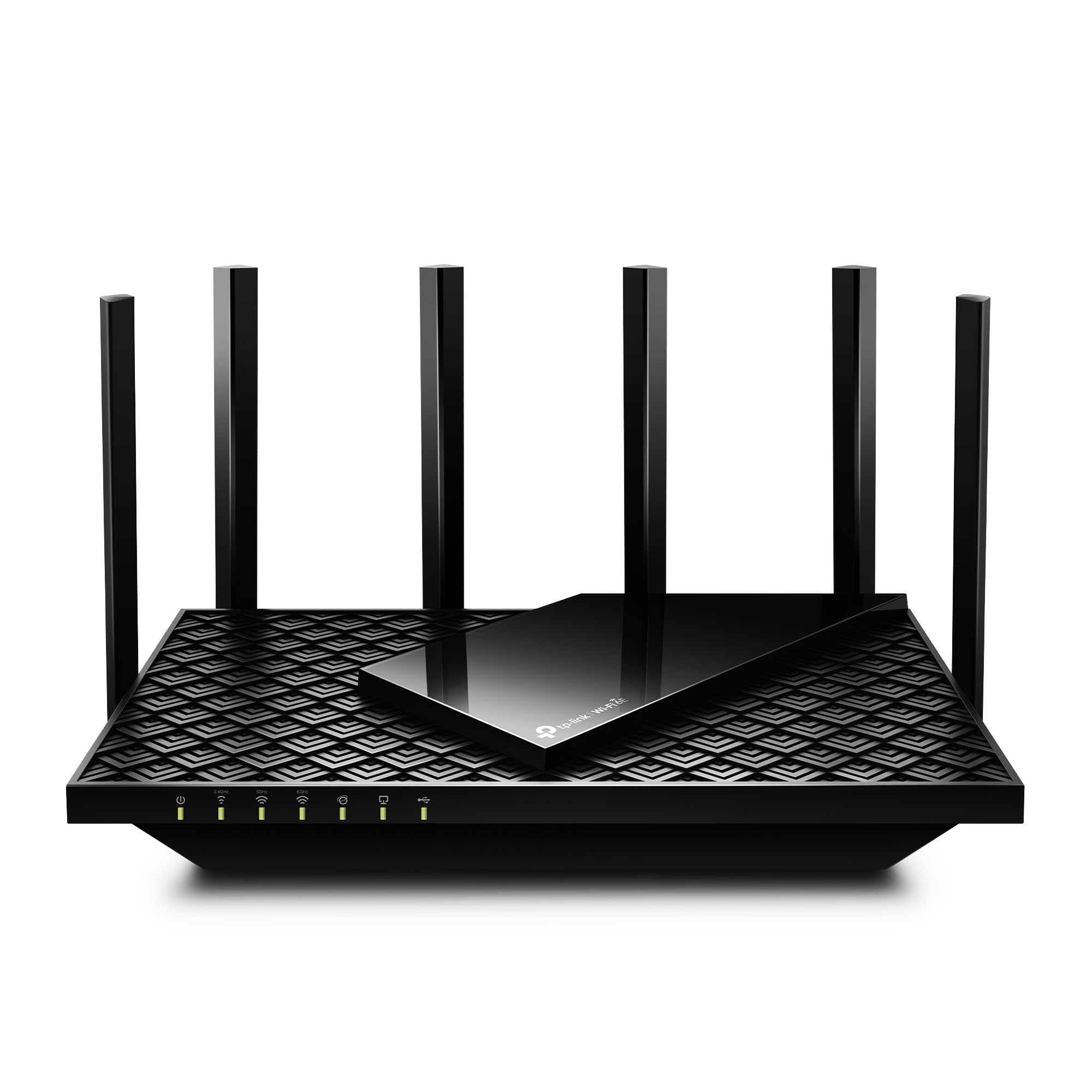
This TP Link AXE5400 review looks at the Archer AXE75, a tri-band Wi-Fi 6E router built around 6 GHz connectivity, expanded device capacity, and VPN options.
Archer AXE75 Review Summary
The quick verdict
5,000+ ratings
Read Amazon ReviewsTP-Link Archer AXE75
A tri-band Wi-Fi 6E router for homes that want a 6 GHz band, mesh expansion, and VPN support, with a modem required for most providers.
- Tri-band Wi-Fi 6E with 6 GHz, 5 GHz, and 2.4 GHz bands; advertised rates are 2402 Mbps, 2402 Mbps, and 574 Mbps respectively.
- Up to 5400 Mbps combined Wi-Fi rate for browsing, streaming, gaming, and downloads.
- OFDMA and tri-band operation are intended to increase capacity for simultaneous device transmissions.
- OneMesh support enables a mesh network with a TP-Link OneMesh extender.

Pros
- Adds a 6 GHz band alongside 5 GHz and 2.4 GHz for compatible Wi-Fi 6E clients.
- OFDMA and three-band operation are built for homes with concurrent device traffic.
Consider before buying
- Most internet provider setups need a separate modem, so include that equipment in your installation plan.
- The 6 GHz band benefits Wi-Fi 6E clients; households without compatible devices may have less reason to prioritize this router's main differentiator.
Read the full review summary
The Archer AXE75 is worth considering when your home has Wi-Fi 6E devices and you want a dedicated 6 GHz band alongside 5 GHz and 2.4 GHz.
Its advertised combined wireless rate is up to 5400 Mbps, with the three bands apportioned at 2402 Mbps, 2402 Mbps, and 574 Mbps; those are link-rate figures, not a promise of internet speed in every room.
It suits households with multiple active devices, especially where gaming, streaming, and video chats compete for airtime.
OFDMA and tri-band operation are intended to increase capacity, while OneMesh compatibility offers a path to extend coverage with a compatible TP-Link extender.
The buying factors
Archer AXE75 Scorecard
Editorial scores reflect listed features and buyer fit; they are not laboratory measurements or customer ratings.
Wi-Fi band selection
Three bands, including 6 GHz, give Wi-Fi 6E devices a newer band to use alongside 5 GHz and 2.4 GHz.
Advertised wireless capacity
Up to 5400 Mbps across the bands is a substantial listed aggregate rate, though real throughput depends on conditions and client devices.
Multi-device features
OFDMA and tri-band operation are designed to help serve more devices concurrently.
Mesh expansion
OneMesh compatibility gives owners a supported way to build a broader home network with a TP-Link OneMesh extender.
Network management and security
VPN server and client support plus HomeShield's basic network tools cover useful home-network controls.
Setup dependency
It works across major internet providers, but most provider setups require a separate modem.
Key Features and Specifications of Archer AXE75
- Tri-band Wi-Fi 6E with 6 GHz, 5 GHz, and 2.4 GHz bands; advertised rates are 2402 Mbps, 2402 Mbps, and 574 Mbps respectively.
- Up to 5400 Mbps combined Wi-Fi rate for browsing, streaming, gaming, and downloads.
- OFDMA and tri-band operation are intended to increase capacity for simultaneous device transmissions.
- OneMesh support enables a mesh network with a TP-Link OneMesh extender.
- VPN server and client support includes OpenVPN, PPTP, and L2TP.
- HomeShield includes basic network security, IoT identification, parental controls, QoS, and usage reports.
- A modem is required for most internet service providers.
Pros and Cons of Archer AXE75
Pros
- Adds a 6 GHz band alongside 5 GHz and 2.4 GHz for compatible Wi-Fi 6E clients.
- OFDMA and three-band operation are built for homes with concurrent device traffic.
- OneMesh can extend the network through a compatible TP-Link extender.
- Offers both VPN server and client functionality, with HomeShield network controls.
Consider before buying
- Most internet provider setups need a separate modem, so include that equipment in your installation plan.
- The 6 GHz band benefits Wi-Fi 6E clients; households without compatible devices may have less reason to prioritize this router's main differentiator.
- Expanding coverage through OneMesh requires a TP-Link OneMesh extender, so account for a compatible extender if one router does not cover your home.
Who Should Buy Archer AXE75?
Good fit
Choose the Archer AXE75 if you have Wi-Fi 6E devices and want tri-band access with a dedicated 6 GHz band.
Its combined rate is up to 5400 Mbps, and OFDMA is intended to help manage simultaneous transmissions in a device-heavy home.
It is also a practical fit if VPN access and basic network controls matter. VPN server and client support, security scanning, IoT identification, and basic parental controls provide several management options from one router.
Consider it for a home network you may expand over time, provided you are comfortable using a TP-Link OneMesh extender and already have, or plan to buy, the modem required by most providers.
Who should skip it
Skip it if your household has no Wi-Fi 6E clients and would not use the 6 GHz band; the router's clearest distinction is its tri-band Wi-Fi 6E design.
Look elsewhere if you need a router with a built-in modem, since most provider connections require a separate modem with this setup.
Archer AXE75 Review Analysis
What the 6 GHz band adds
Wi-Fi 6E brings a 6 GHz band to the familiar 5 GHz and 2.4 GHz options. That gives compatible clients an additional band for network traffic, but devices need Wi-Fi 6E support to use it.
The AXE75's rate allocation puts 2402 Mbps on 6 GHz and another 2402 Mbps on 5 GHz, with 574 Mbps on 2.4 GHz; these figures describe the router's advertised wireless rates, not guaranteed application speeds.
Capacity for busy homes
OFDMA and tri-band operation target homes where several devices need airtime at once.
This is a capacity-oriented feature set for mixed streaming, gaming, and downloads, rather than a reason to assume every device will achieve the combined headline rate. Client capability, placement, and network conditions still shape what each device receives.
Expansion and management
OneMesh offers an expansion route when a single router does not serve the whole home, but it depends on a TP-Link OneMesh extender.
VPN server and client functions add options for remote access and VPN connections, while HomeShield's basic tier covers network scanning, IoT identification, parental controls, QoS, and periodic reports.
Alternatives to Archer AXE75
Computer Routers alternative
1,000+ ratings
Read Amazon ReviewsTP-Link Archer BE230
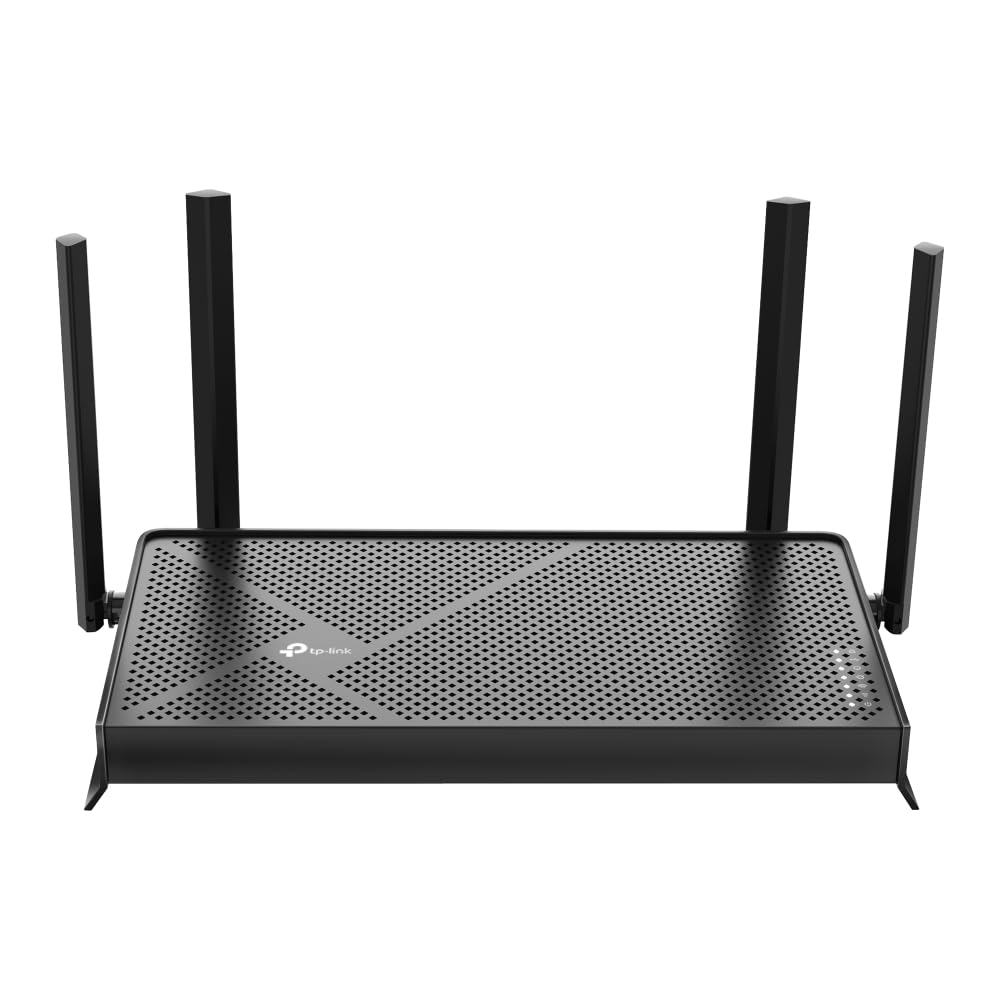
Choose the BE230 if you want Wi-Fi 7 features and two 2.5G ports; stay with the AXE75 if a dedicated 6 GHz band and tri-band connectivity are the priority.
- The Archer BE230 is a dual-band Wi-Fi 7 router with two 2.5G ports and Multi-Link Operation; dual-band routers do not support 6 GHz.
- The Archer AXE75 combines tri-band Wi-Fi 6E with a 6 GHz band for more bandwidth and responsive gaming and video chatting.
Computer Routers alternative
500+ ratings
Read Amazon ReviewsTenda RX12 Pro V3.0
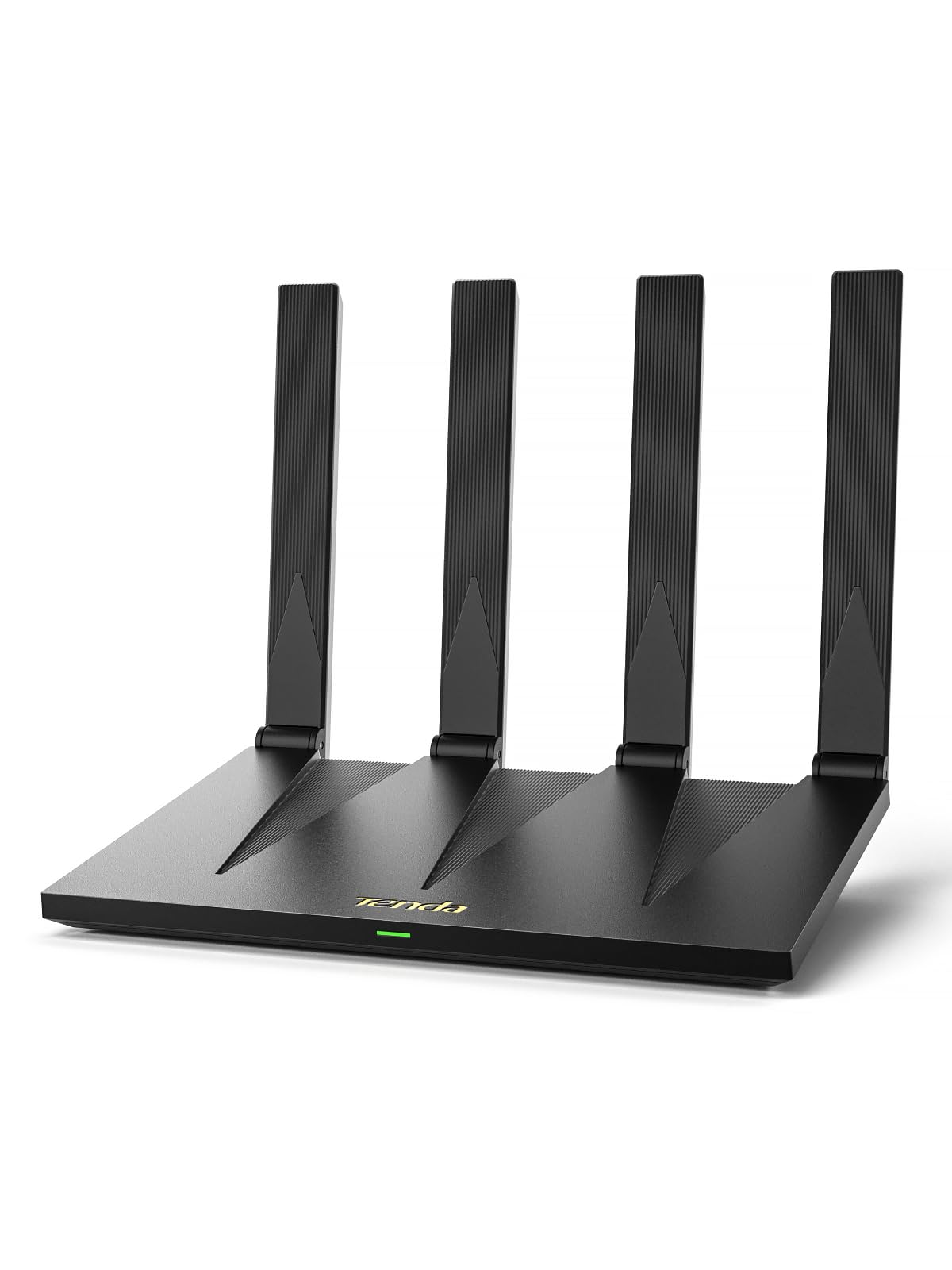
Choose the Tenda if dual-band Wi-Fi 6 and four Gigabit ports fit your needs; choose the AXE75 if you specifically want tri-band Wi-Fi 6E and its 6 GHz band.
- The Tenda RX12 Pro V3.0 is a dual-band Wi-Fi 6 router with up to 2402 Mbps on 5 GHz, up to 574 Mbps on 2.4 GHz, and four full Gigabit ports.
- The Archer AXE75's defining appeal is its three-band setup, including 6 GHz support for Wi-Fi 6E devices.
Is Archer AXE75 Worth It?
The TP-Link Archer AXE75 is worth considering if Wi-Fi 6E clients can use its 6 GHz band and your home benefits from tri-band connectivity.
OFDMA, OneMesh expansion, VPN support, and HomeShield controls round out a flexible home-network feature set.
Buy it with a modem plan in mind: most internet providers require a separate modem, and extending coverage through OneMesh also depends on a compatible extender.
For Wi-Fi 6E homes that want these band and management options, it is a well-rounded router to shortlist.
Your review at a glance
5,000+ ratings
Read Amazon ReviewsTP-Link Archer AXE75
A tri-band Wi-Fi 6E router for homes that want a 6 GHz band, mesh expansion, and VPN support, with a modem required for most providers.
- Tri-band Wi-Fi 6E with 6 GHz, 5 GHz, and 2.4 GHz bands; advertised rates are 2402 Mbps, 2402 Mbps, and 574 Mbps respectively.
- Up to 5400 Mbps combined Wi-Fi rate for browsing, streaming, gaming, and downloads.
- OFDMA and tri-band operation are intended to increase capacity for simultaneous device transmissions.
- OneMesh support enables a mesh network with a TP-Link OneMesh extender.