The best USB hubs depend on which connections your computer lacks, whether you need charging or display output, and how many peripherals you use at once. These picks cover compact laptop adapters, mobile recording, and powered desktop expansion so you can match ports and power to your setup.
Quick Top Products
SABRENT HB-6PNV USB-C Hub & SSD Enclosure
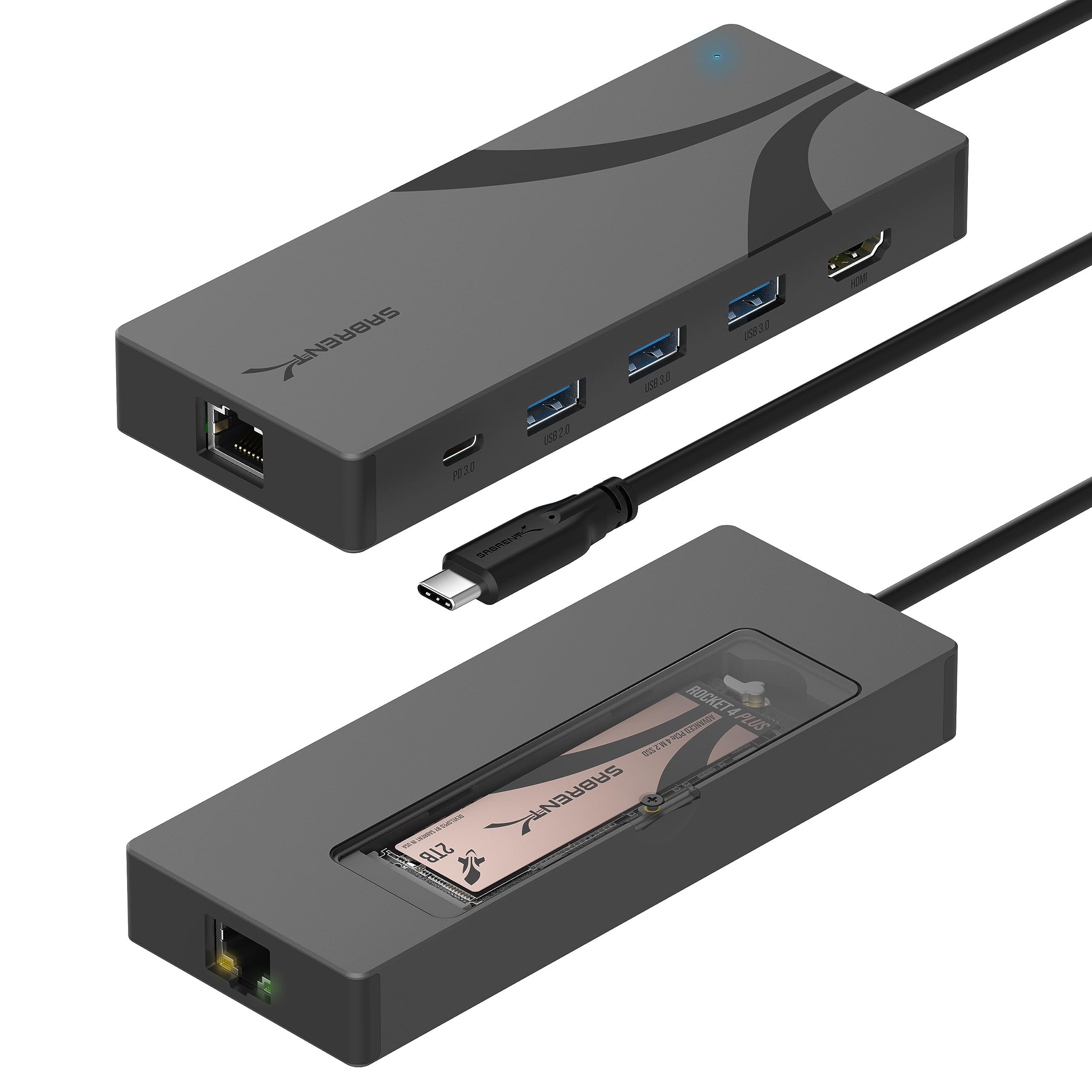
- Combines HDMI, Gigabit Ethernet, USB ports, and an M.2 SSD slot.
- Supports HDMI output up to 4K at 60Hz.
- Passes through up to 90W of USB-C charging power.
Best For: Laptop users who want display, wired networking, and an installable SSD in one travel hub.

SABRENT HB-TG5P 5-in-1 USB-C Hub
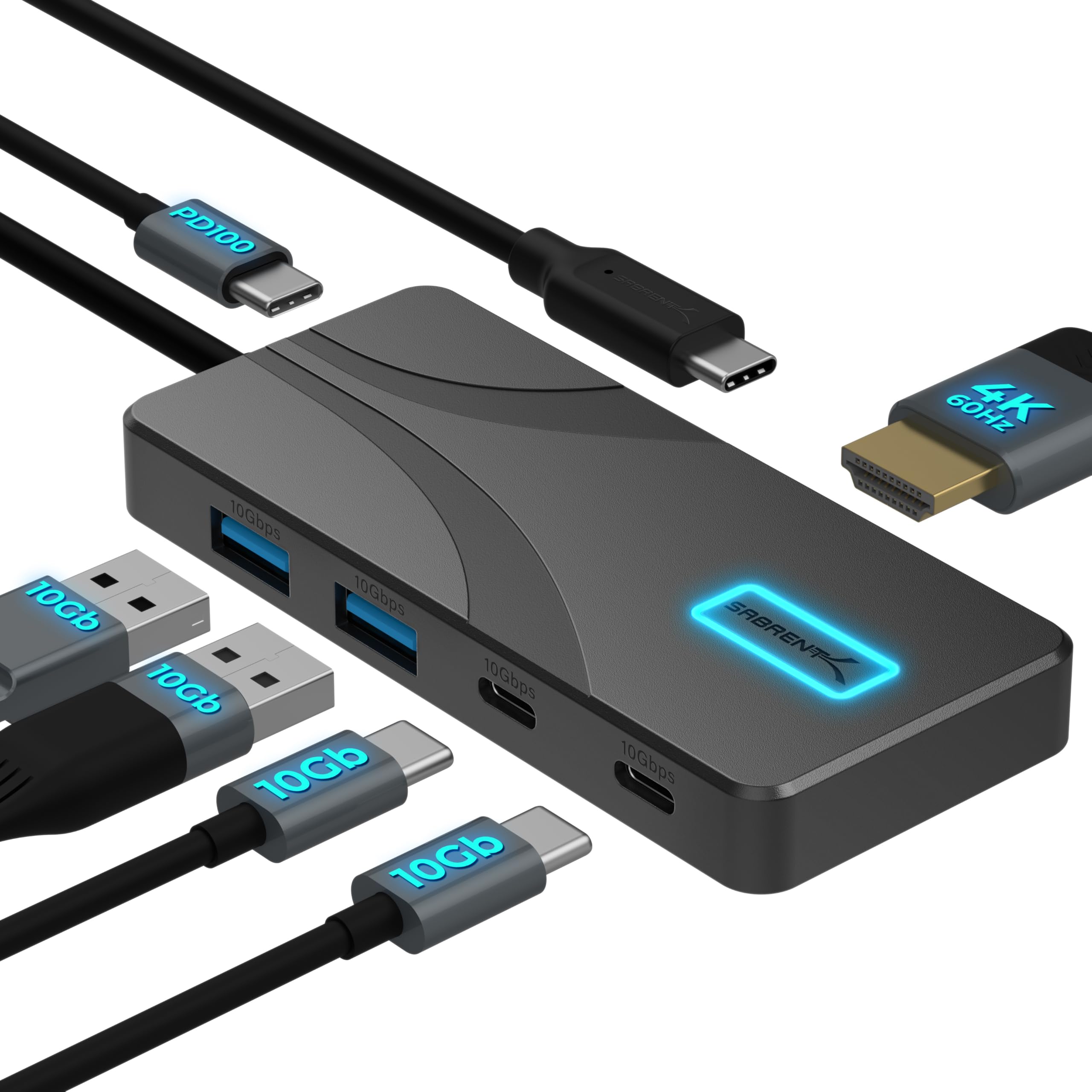
- Has four 10Gbps data ports: two USB-A and two USB-C.
- Supports HDMI output up to 4K at 60Hz.
- Passes up to 80W to a laptop from a 100W USB-C charger.
Best For: Laptop users who need several fast USB-C and USB-A data ports plus a high-resolution display connection.
SABRENT HB-SHPU USB-C Hub
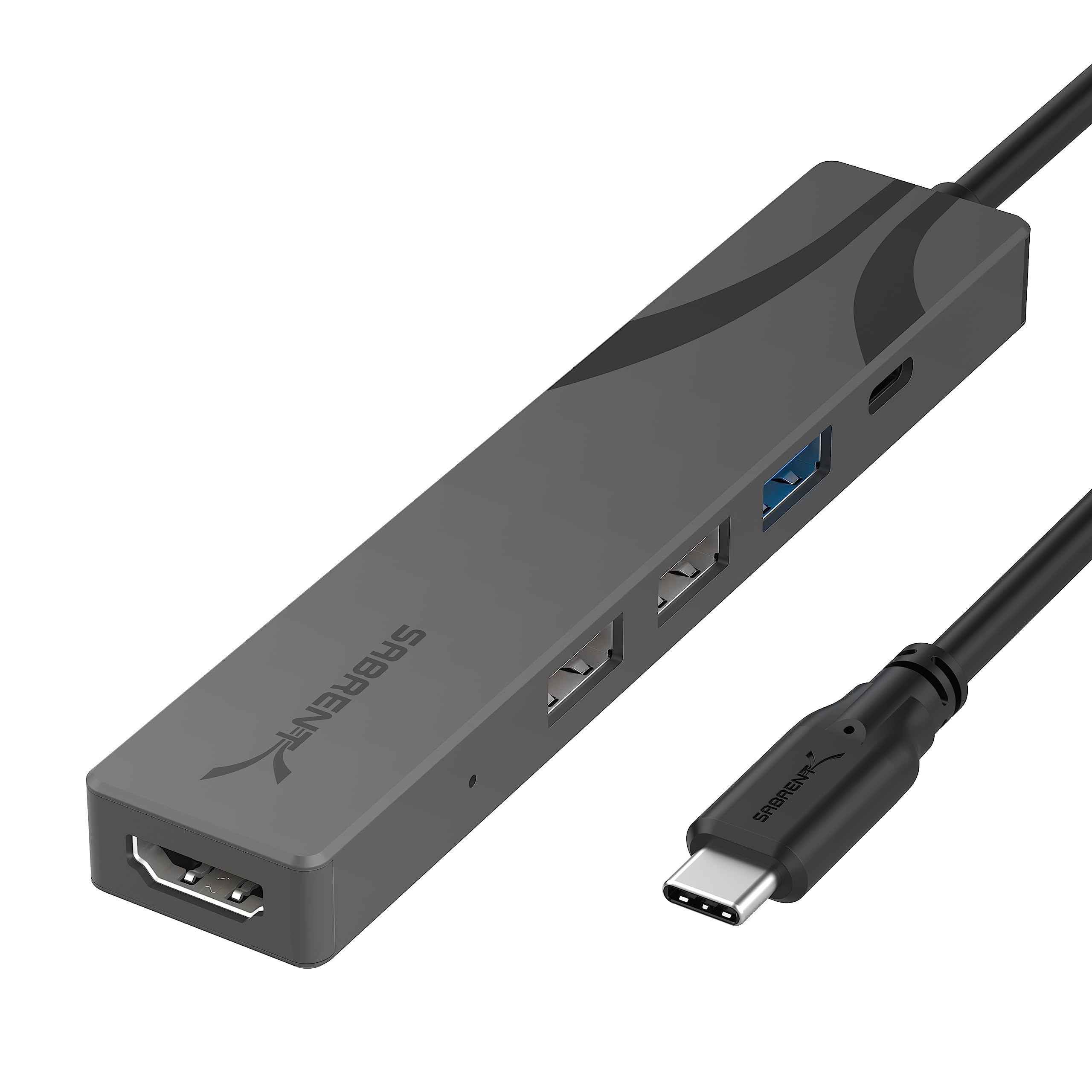
- Combines HDMI, three USB-A ports, and USB-C power delivery.
- Supports HDMI output up to 4K at 60Hz.
- Has a 15cm integrated USB-C cable.
Best For: Traveling laptop users who want HDMI, three USB-A ports, and USB-C power delivery in a compact adapter.
j5create JCD373EC USB-C 7-in-1 Hub
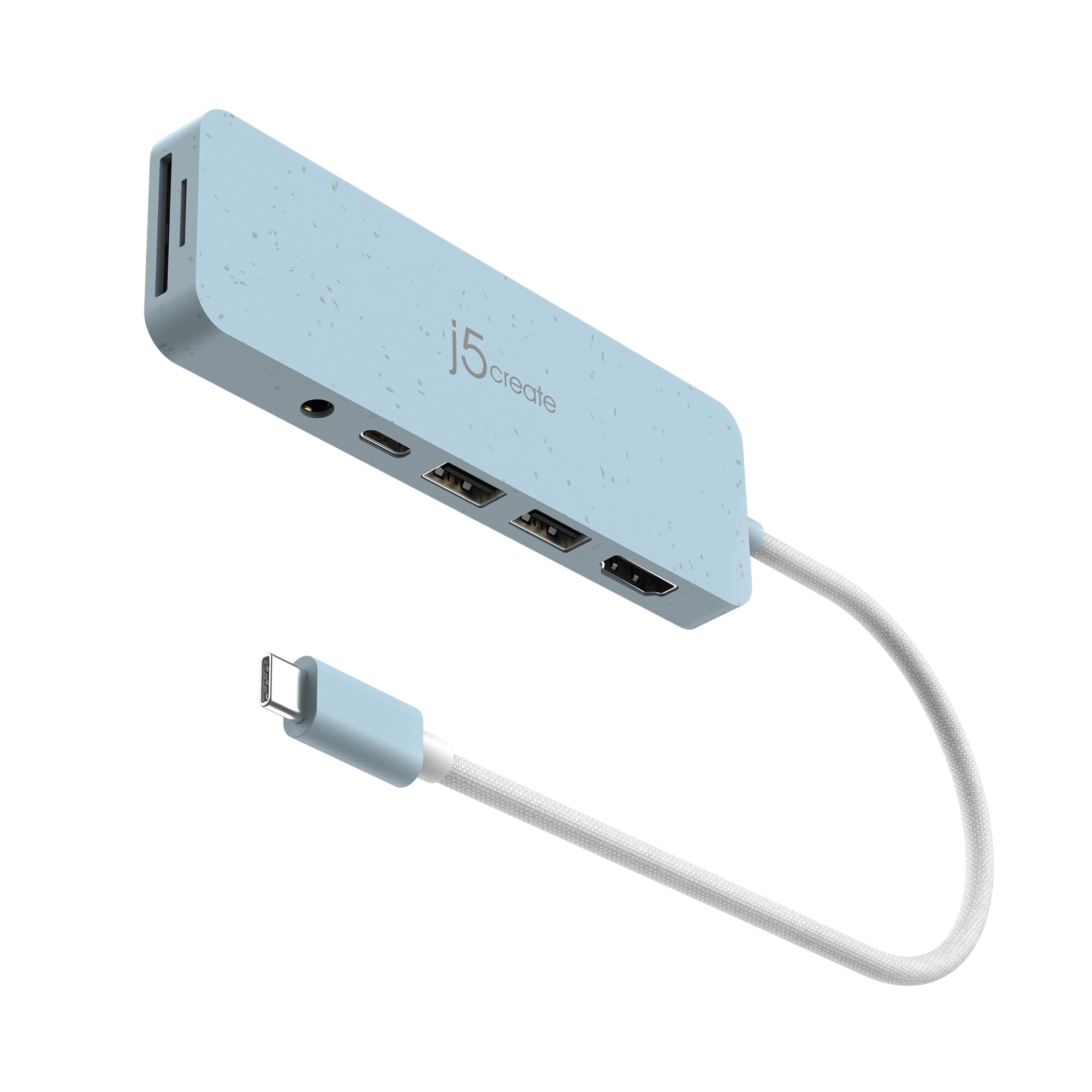
- Includes two 5Gbps USB-A ports, HDMI, audio, and card readers.
- Supports HDMI resolutions up to 4K at 30Hz.
- Has a USB-C PD port rated at 100W.
Best For: Laptop and tablet users who need HDMI, USB-A, memory-card slots, and a 3.5mm audio jack.
SmallRig 4598 4-in-1 USB-C Hub
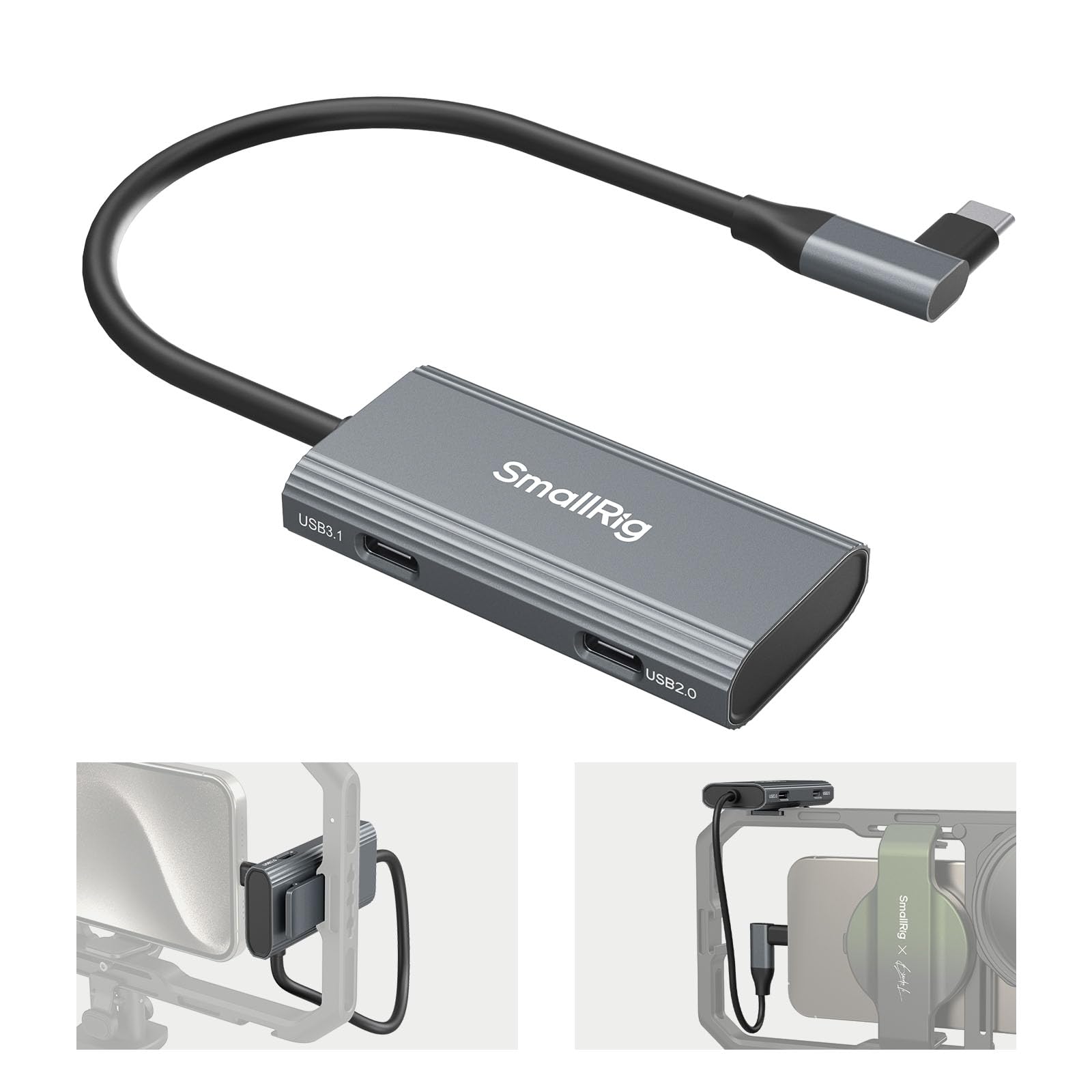
- Provides one USB-C 3.1 port and two USB-C 2.0 ports.
- Supports PD charging up to 100W.
- Includes a cold shoe mount for shooting equipment.
Best For: Mobile creators who need to charge a phone while connecting USB-C audio gear and recording accessories.
SABRENT HB-B7C3 10-Port Powered USB 3.0 Hub
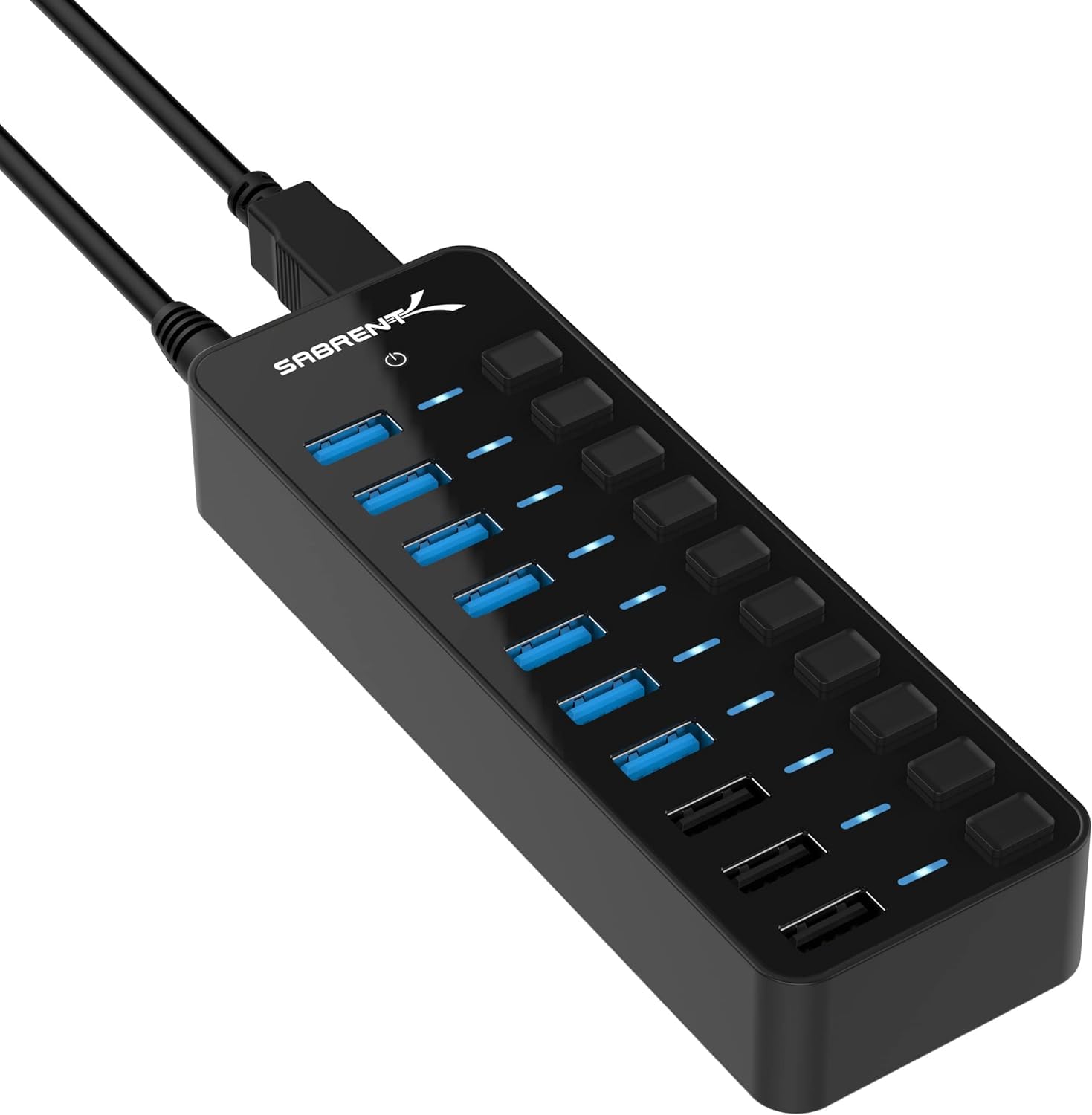
- Has seven USB 3.0 data ports and three dedicated charging ports.
- Includes a 60W, 12V/5A power adapter.
- Each port has an individual power switch and LED.
Best For: Desktop users who want several USB-A data connections, per-port switches, and dedicated charging ports.
SABRENT HB-PU16 16-Port USB 3.0 Hub
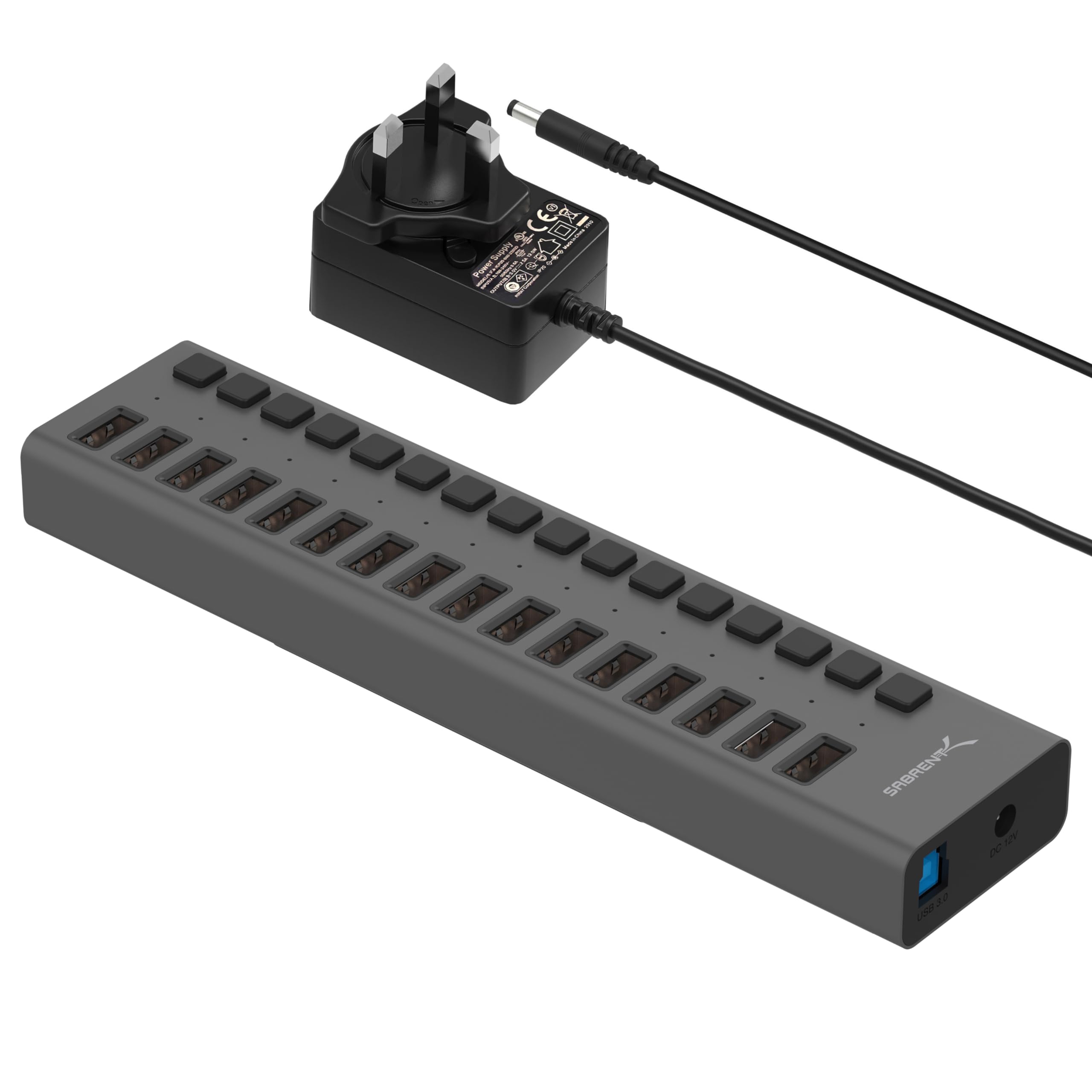
- Provides 16 USB 3.0 downstream ports.
- Supports data transfer speeds up to 5Gbps.
- Has a blue LED for each port's power status.
Best For: Users managing many USB peripherals who need a large powered hub with individual port switches.
SABRENT HB-3A4C 7-Port USB-C Hub
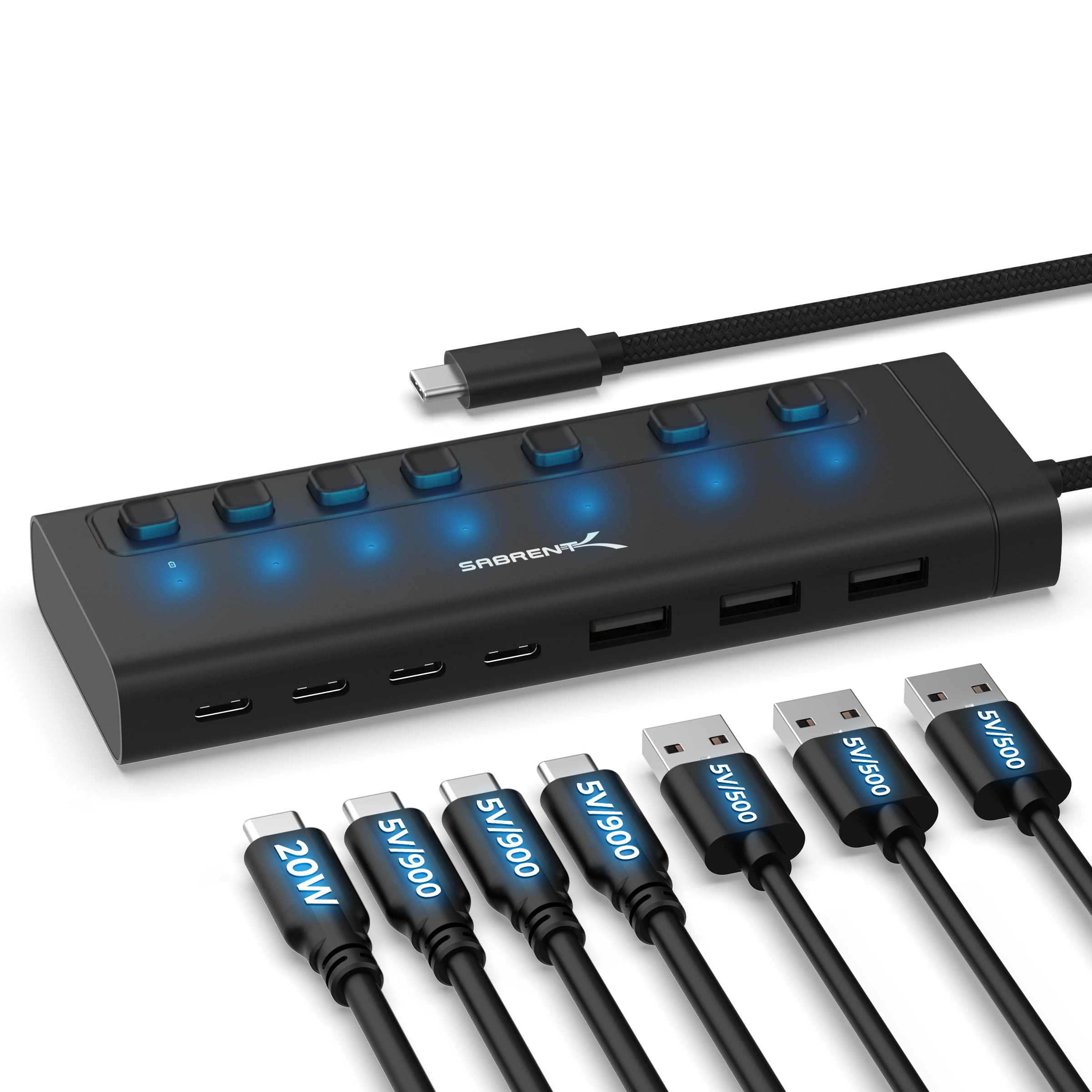
- Combines three USB-A and four USB-C 5Gbps ports.
- Includes a 48W power adapter.
- Has individual switches and white LED indicators.
Best For: USB-C device owners who need a powered mix of USB-A and USB-C ports with individual controls.
SABRENT HB-STDK USB-C Gaming Hub
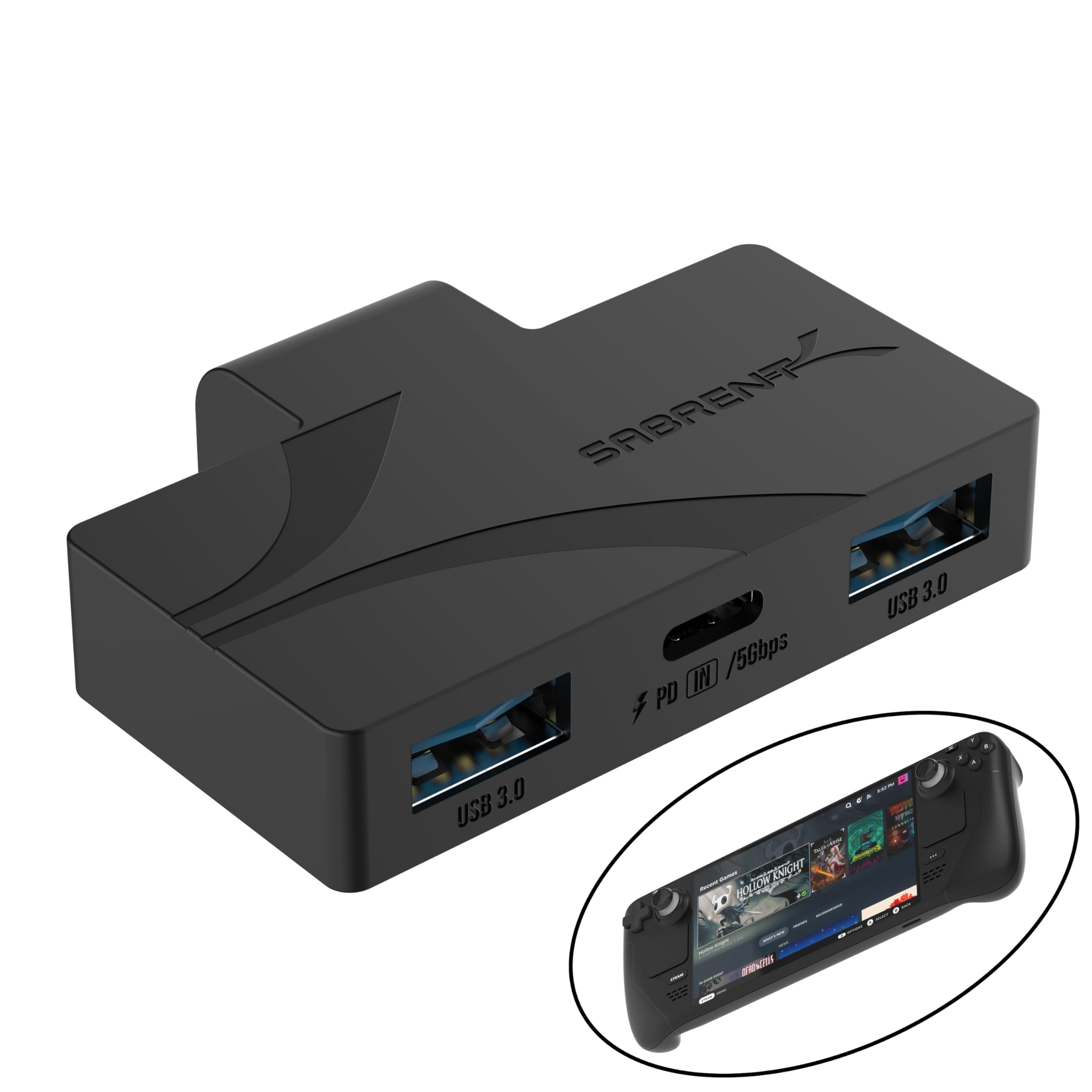
- Designed for Steam Deck and Steam Deck OLED.
- Provides dual downstream USB-A ports and a USB-C PD port.
- Uses a 5Gbps upstream USB-C connection.
Best For: Steam Deck owners who need extra USB-A ports and USB-C PD pass-through in a compact gaming setup.
SABRENT HB-U3CR USB-C 5-in-1 Hub
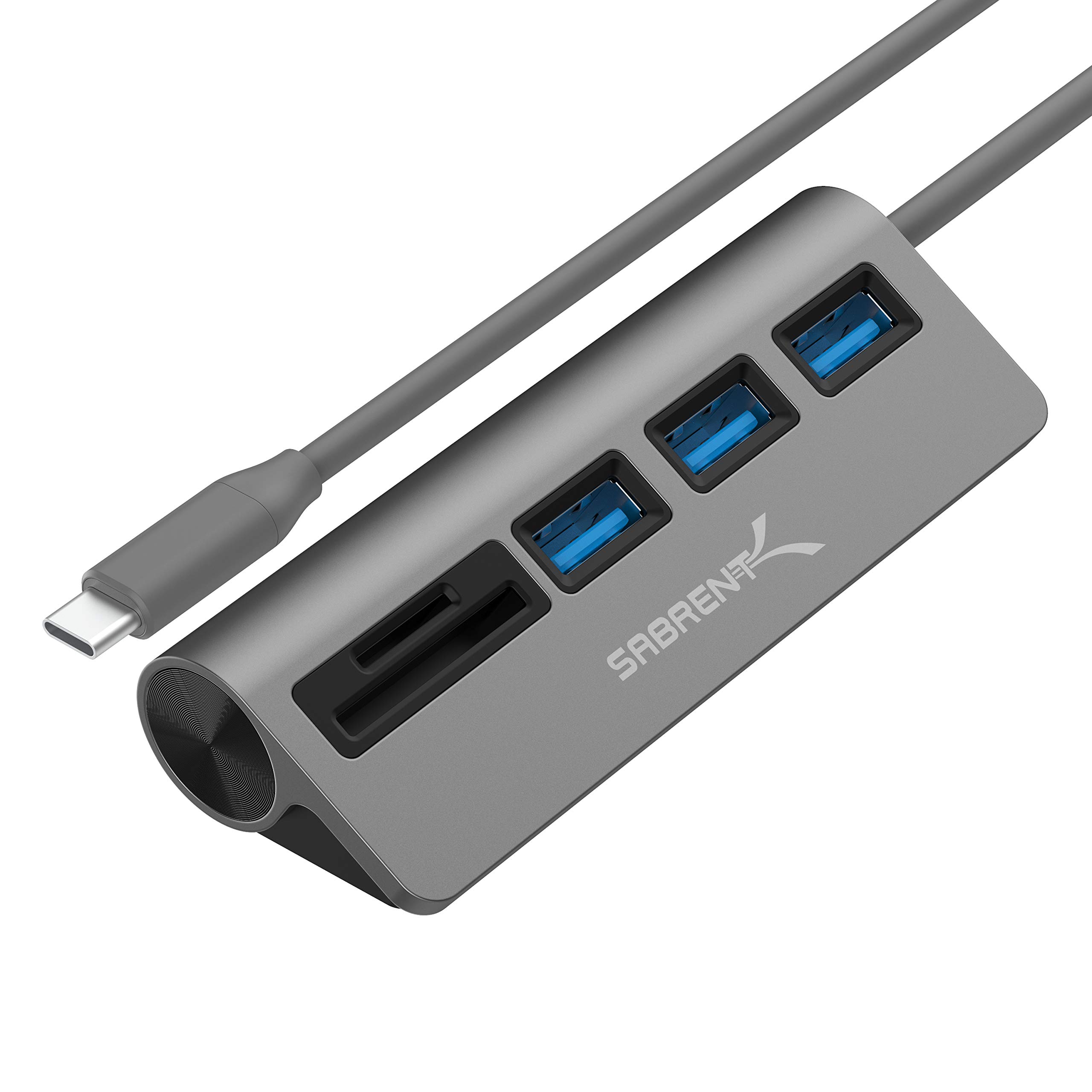
- Combines three USB 3.0 Type-A ports with a card reader.
- Supports SD, SDHC, and Micro SD cards.
- Supports data transfers up to 5Gbps.
Best For: Laptop users who transfer memory cards and still need several USB-A ports for peripherals.
Best for Built-In Storage
SABRENT USB-C Hub & SSD Enclosure, 6-Port Dock with M.2 SSD Slot, 90W Power Delivery, USB 3.0 & 2.0 Ports, 4K HDMI, RJ45 Gigabit Ethernet (HB-6PNV)
This USB-C hub combines everyday expansion with a built-in M.2 SSD slot, so it can add storage as well as connections. It has three USB-A ports, HDMI output up to 4K at 60Hz, Gigabit Ethernet, and up to 90W bypass charging.
The SSD slot supports M.2 SATA or NVMe drives in 2242, 2260, or 2280 form factors, with connection speeds up to 5Gbps. Its integrated USB-C cable connects at 10Gbps.
Check that your device supports DisplayPort Alternate Mode for HDMI, and remember that the hub does not include an SSD.
Best For: Laptop users who want display, wired networking, and an installable SSD in one travel hub.
| Pros | Cons |
|---|---|
|
|
Choose this if one travel hub needs to handle a wired network, an external screen, and expandable storage. Its M.2 slot is the defining feature, while the three USB-A ports include two faster ports and one USB 2.0 port for simpler peripherals.
Check the SSD form factor and interface before buying, and confirm your laptop supports DP Alt Mode if you plan to use HDMI.
Best for Fast USB-C Peripherals
SABRENT USB C Hub 5-in-1, 10Gbps USB-A & USB-C Ports, Single 4K@60Hz HDMI, 100W PD Input, 80W Laptop Charging, Compact Aluminum Docking Station for MacBook, iPad, Laptops & Tablets (HB-TG5P)
The HB-TG5P focuses on fast peripheral connections, with two USB-A and two USB-C data ports rated at 10Gbps. HDMI supports output up to 4K at 60Hz, while a dedicated USB-C PD input passes up to 80W to the laptop when connected to a 100W charger.
The integrated USB-C cable is 60cm long, and the aluminum housing uses passive cooling. The charger is not included, so account for that if you need laptop charging.
Extended desktop mode also depends on MST support from the host device.
Best For: Laptop users who need several fast USB-C and USB-A data ports plus a high-resolution display connection.
| Pros | Cons |
|---|---|
|
|
Pick this when your workflow uses multiple fast USB-C accessories as well as USB-A devices. Its port mix and HDMI output make it more versatile for a desk than a hub focused only on basic expansion.
Budget for a compatible 100W charger if you want the stated laptop pass-through, and check the host's video support, including MST for extended desktop mode.
Best Compact HDMI and Charging Adapter
SABRENT Multi-Port USB-C Hub with Power Delivery, HDMI Out, 3 USB A Ports, 4K@60Hz, 90W PD, Aluminum [HB-SHPU]
This compact USB-C adapter covers the essentials for a laptop or tablet: three USB-A ports, HDMI 2.0, and up to 90W USB-C power delivery. One USB-A port supports transfers up to 5Gbps; the other two are USB 2.0 ports for keyboards, mice, and similar accessories.
HDMI output reaches up to 4K at 60Hz, provided the host supports DisplayPort Alternate Mode. The integrated 15cm cable avoids carrying a separate lead, and the aluminum casing is designed for travel.
Check your device's USB-C video support before relying on the display connection.
Best For: Traveling laptop users who want HDMI, three USB-A ports, and USB-C power delivery in a compact adapter.
| Pros | Cons |
|---|---|
|
|
This suits a travel kit where HDMI and charging matter more than having several high-speed data ports. The short integrated cable and light aluminum design keep the adapter compact, while the single 5Gbps USB-A port can handle faster storage.
Before buying, verify DP Alt Mode on the laptop or tablet and consider whether two USB 2.0 ports are enough for your peripherals.
Best for Card Readers and Audio
j5create USB-C Multi-Port Hub with Power Delivery with 4K HDMI/2 USB-A 5Gbps/PD 100W Charging SD&Micro SD/3.5mm Audio | for MacBook Pro&Air/iPad Pro/iMac/Surface/XPS/Thinkpad/Galaxy/and More(JCD373EC)
The JCD373EC gathers several common laptop connections in one USB-C adapter: two 5Gbps USB-A ports, HDMI, SD and microSD readers, a 3.5mm audio jack, and a 100W PD port. Its HDMI output supports up to 4K at 30Hz, so it may be a fit for presentations and general display use.
The hub is designed for a broad mix of computers, tablets, and handheld systems. Check that your device supports the required USB-C functions, and confirm that 4K at 30Hz matches your display needs.
Best For: Laptop and tablet users who need HDMI, USB-A, memory-card slots, and a 3.5mm audio jack.
| Pros | Cons |
|---|---|
|
|
Choose this if you regularly move photos from SD or microSD cards and also want audio and HDMI in the same adapter. It has a broader mix of connections than a basic USB hub, but its HDMI maximum is 4K at 30Hz.
Check the refresh rate you need and verify that your device supports USB-C video output before counting on the display connection.
Best for Mobile Video Recording
SmallRig 4-in-1 USB-C Hub with Cold Shoe Mount
SmallRig's 4598 is built around mobile shooting rather than general laptop expansion. It provides a PD charging port rated up to 100W, one USB-C 3.1 interface with transfers up to 10Gbps, and two USB-C 2.0 interfaces for audio or other accessories.
The hub supports ProRes 4K 60 video recording on mobile phones, and its cold shoe mount can attach to compatible shooting equipment. At 38.3g, it is compact to carry.
Check that your phone and recording setup support the intended video workflow and connections.
Best For: Mobile creators who need to charge a phone while connecting USB-C audio gear and recording accessories.
| Pros | Cons |
|---|---|
|
|
This is the focused option for a phone-centered video rig, especially when a cold shoe mount and USB-C audio connections are useful. Its single 10Gbps interface is distinct from the two USB 2.0 ports, so check which accessories need faster data.
Confirm phone compatibility and the recording setup before buying, particularly if your workflow depends on ProRes capture.
Best for Powered Expansion and Charging
SABRENT 10-Port USB 3.0 Hub, Individual Power Switches and LEDs, 3 Smart Charging Ports, 60W Power Adapter, for PC, Mac, Xbox, PS5, Laptop, Desktop, USB Devices (HB-B7C3)
This powered desktop hub separates seven USB 3.0 data ports from three dedicated charging ports. The data connections support transfers up to 5Gbps, and each port has an individual power switch and LED indicator.
A 60W, 12V/5A adapter is included to supply the hub. The charging ports auto-detect devices and deliver up to 2.4A per port.
That layout can help when a desk has a mix of peripherals and USB-powered devices, but note that its three charging ports are distinct from the seven data ports when planning what connects where.
Best For: Desktop users who want several USB-A data connections, per-port switches, and dedicated charging ports.
| Pros | Cons |
|---|---|
|
|
This is a practical fit for a fixed desk with multiple peripherals and devices to charge. Individual switches make it easier to disconnect a device without unplugging its cable, while the included adapter powers the hub.
Check whether your computer and peripherals use USB-A, and plan around the seven data ports plus three dedicated charging connections rather than treating all ten as interchangeable data ports.
Best for Maximum Port Count
SABRENT 16-Port USB 3.0 Data Hub and Charger with Individual Power Switches, 90W High-Power Output (HB-PU16)
The HB-PU16 puts 16 downstream USB 3.0 ports in one powered hub, giving a workstation room for multiple drives, card readers, and other USB peripherals. It supports transfer speeds up to 5Gbps and is compatible with USB 2.0 and USB 1.1 devices.
Each port has a blue LED for power status, and the hub is plug-and-play and hot-swappable. The product also supports charging USB peripherals, but the supplied details do not specify charging output per port.
Check your power needs and how many devices will be used for data before choosing a high-capacity hub.
Best For: Users managing many USB peripherals who need a large powered hub with individual port switches.
| Pros | Cons |
|---|---|
|
|
Choose this if the main constraint is the number of devices connected at one workstation. It offers more downstream ports than the smaller powered hubs here, with per-port status lights and USB 3.0 data support.
Check the power arrangement and charging output before connecting devices that draw power, since per-port charging capacity is not specified.
Best for Mixed USB-C and USB-A Devices
SABRENT 7-Port USB-C Hub, 48W Powered, 5Gbps, 3 USB-A + 4 USB-C (HB-3A4C) | 20W PD; LED status; aluminum body; power switches; for Mac, PC, Steam Deck, ROG Ally
This powered hub offers a mix of three USB-A and four USB-C ports, all rated for 5Gbps transfers. Each port has an individual power switch and white LED indicator.
The included 48W adapter supplies the hub, while one USB-C port supports up to 20W PD and the other three USB-C ports deliver 5V/900mA. That makes the port-by-port power distinction important when connecting phones or higher-demand accessories.
It works with Windows, macOS, Linux, and most USB-C host devices, though the exact host connection details should be checked for your setup.
Best For: USB-C device owners who need a powered mix of USB-A and USB-C ports with individual controls.
| Pros | Cons |
|---|---|
|
|
This is worth considering when your peripherals mix USB-A and USB-C and you want independent control of each port. Its four USB-C connections do not all provide the same power: one supports up to 20W PD, while the others are rated at 5V/900mA.
Match each device to the suitable port and verify how the hub connects to your host before buying.
Best for Steam Deck Setups
SABRENT USB-C 3-Port Gaming Hub for Steam Deck, PD (HB-STDK) | 5Gbps USB 3.2; dual USB-A ports; PD charging; compact; for Steam Deck & handhelds
Designed with Steam Deck and Steam Deck OLED use in mind, the HB-STDK combines two downstream USB-A ports with a USB-C port for PD charging. Its upstream USB-C connection supports 5Gbps, and the compact form is intended to take up little space alongside a handheld.
The hub also works with Windows, macOS, Linux, SteamOS, and other USB-C host devices. The supplied details do not give a PD wattage or describe a video output, so check those needs before treating it as a full dock for a monitor or other demanding setup.
Best For: Steam Deck owners who need extra USB-A ports and USB-C PD pass-through in a compact gaming setup.
| Pros | Cons |
|---|---|
|
|
Choose this for a compact Steam Deck setup where two extra USB-A ports and PD pass-through cover the main needs. It is more specialized than a general laptop hub, and the supplied features do not include HDMI or a stated charging wattage.
Confirm your charger and display needs before buying, especially if you expect one adapter to handle both charging and an external monitor.
Best for SD and microSD Transfers
SABRENT USB-C 3.0 Hub, 5-in-1 USB SD Card Reader, SD & TF Dual Slot + 3 USB 3.0 Hub Portable Compatible with MacBook, Mac Pro/Mini, iMac, XPS, Surface Pro, Windows, Thunderbolt (HB-U3CR)
The HB-U3CR pairs three USB 3.0 Type-A ports with an all-in-one SD and microSD card reader. Its data transfer rate reaches up to 5Gbps, and it supports SD, SDHC, and Micro SD (T-Flash) cards.
Plug-and-play and hot-swappable operation makes it straightforward to add to a compatible USB-C setup. It does not list HDMI or power delivery, so this is a data expansion choice rather than a display or laptop-charging hub.
Check your card formats and USB-C host compatibility before buying.
Best For: Laptop users who transfer memory cards and still need several USB-A ports for peripherals.
| Pros | Cons |
|---|---|
|
|
Pick this if card transfers are a regular part of your workflow and you also need three USB-A connections. It focuses on data and card access, unlike the hubs here that add HDMI or power delivery.
Verify that your cards use a supported format and that your computer has a compatible USB-C port; choose another style if charging or an external display is essential.
How to Choose Usb Hubs
How We Picked Best USB Hubs
We selected hubs that serve distinct connection needs: fast USB-C laptop expansion, HDMI and power delivery, card access, mobile video, handheld gaming, and powered desktop setups. Port type and purpose matter as much as total count.
Some hubs reserve connections for charging, while others provide only data ports; the 16-port model also leaves per-port charging capacity unspecified.
We favored products with clearly described connection speeds, display support, power arrangements, compatibility, or controls. That helps distinguish a compact travel adapter from a desktop hub intended to stay connected to many peripherals.
Specialized products remain useful when their use case is clear, such as the SmallRig mobile video hub and the Steam Deck-focused option.
Comparing Best USB Hubs
Start with the host connection and the devices you plan to attach. The HB-TG5P offers four 10Gbps data ports alongside 4K at 60Hz HDMI, while the HB-SHPU trades two faster USB-A ports for a compact mix of HDMI, 90W PD, and three USB-A connections.
The j5create adapter adds SD, microSD, and audio, with HDMI capped at 4K at 30Hz.
For a desktop, compare port roles rather than just the headline count. The HB-B7C3 separates seven USB 3.0 data ports from three charging ports.
The HB-PU16 gives you 16 downstream USB 3.0 ports, but charging output per port is not specified. The HB-3A4C suits setups that need USB-C and USB-A together, with different power ratings across its USB-C ports.
If storage and network access matter, the HB-6PNV adds Gigabit Ethernet and an M.2 SSD slot. The HB-U3CR instead focuses on SD and microSD card reading plus three USB-A data ports.
Neither choice should be treated as interchangeable: consider the formats and connections your workflow actually uses.
| Product | Standout features | Best for |
|---|---|---|
| SABRENT HB-6PNV USB-C Hub & SSD EnclosureCheck Price |
| Laptop users who want display, wired networking, and an installable SSD in one travel hub. |
| SABRENT HB-TG5P 5-in-1 USB-C HubCheck Price |
| Laptop users who need several fast USB-C and USB-A data ports plus a high-resolution display connection. |
| SABRENT HB-SHPU USB-C HubCheck Price |
| Traveling laptop users who want HDMI, three USB-A ports, and USB-C power delivery in a compact adapter. |
| j5create JCD373EC USB-C 7-in-1 HubCheck Price |
| Laptop and tablet users who need HDMI, USB-A, memory-card slots, and a 3.5mm audio jack. |
| SmallRig 4598 4-in-1 USB-C HubCheck Price |
| Mobile creators who need to charge a phone while connecting USB-C audio gear and recording accessories. |
| SABRENT HB-B7C3 10-Port Powered USB 3.0 HubCheck Price |
| Desktop users who want several USB-A data connections, per-port switches, and dedicated charging ports. |
| SABRENT HB-PU16 16-Port USB 3.0 HubCheck Price |
| Users managing many USB peripherals who need a large powered hub with individual port switches. |
| SABRENT HB-3A4C 7-Port USB-C HubCheck Price |
| USB-C device owners who need a powered mix of USB-A and USB-C ports with individual controls. |
| SABRENT HB-STDK USB-C Gaming HubCheck Price |
| Steam Deck owners who need extra USB-A ports and USB-C PD pass-through in a compact gaming setup. |
| SABRENT HB-U3CR USB-C 5-in-1 HubCheck Price |
| Laptop users who transfer memory cards and still need several USB-A ports for peripherals. |
Choosing a USB Hub for Charging and Video
USB-C alone does not guarantee video output or laptop charging. For HDMI, check that the computer or tablet supports DisplayPort Alternate Mode; for extended desktop use with the HB-TG5P, the host also needs MST.
Compare the resolution and refresh rate you need: some hubs here support 4K at 60Hz, while the j5create model supports up to 4K at 30Hz.
Separate power delivery to a laptop from charging ports for accessories. The HB-TG5P passes up to 80W from a 100W charger, and that charger is not included.
The HB-B7C3 has three dedicated charging ports rated up to 2.4A each, while the HB-3A4C has one USB-C port supporting up to 20W PD and three other USB-C ports rated at 5V/900mA. Check each port's role and rating before connecting equipment.
Picking a USB Hub for Travel, Cards, or a Gaming Handheld
For a mobile laptop setup, a short integrated cable and a compact body can reduce loose accessories. The HB-SHPU has a 15cm cable, and the HB-6PNV adds wired Ethernet and expandable SSD storage for users who need more than basic ports.
Card-based workflows have two different options: the j5create adapter includes SD and microSD readers with audio, while the HB-U3CR combines a card reader with three USB-A ports.
Handheld owners can consider the HB-STDK for Steam Deck use, while the HB-6PNV notes support for Steam Deck and ASUS ROG Ally among its compatible devices. The SmallRig hub addresses a different mobile setup: phone video recording with a cold shoe mount and USB-C audio connections.
Match the design to where the hub attaches and what has to remain connected during use.
Who Should Buy Which USB Hub?
Choose the HB-TG5P for several fast USB-C and USB-A peripherals plus HDMI, provided you have a compatible charger and display-capable host. Pick the HB-SHPU for a compact HDMI and charging adapter, or the j5create hub when card readers and a headphone jack matter.
The HB-6PNV fits users who want Gigabit Ethernet and an internal M.2 SSD slot in their travel hub.
For a multi-device desktop, the HB-B7C3 pairs USB 3.0 data ports with separate charging connections, while the HB-PU16 prioritizes a larger number of downstream ports. Choose the HB-3A4C for a powered USB-A and USB-C mix with individual switches.
Mobile creators can look to SmallRig, Steam Deck users to the HB-STDK, and card-transfer workflows to the HB-U3CR. Before ordering, confirm the host connector, video support, charger requirement, and power behavior of the particular ports you plan to use.